Posted: June 26, 2005
 Slow your aging process like this digital girl
who never ages.
Slow your aging process like this digital girl
who never ages.
 Virtual Digital Girl - Perfect Anti-Aging Formula
Gamers, it is important that you live as long as possible to break
as many records as you can. That is why I have outlined below how
you really can add several years to your life and give yourself
extra brain power. Please enjoy the below facts outlined below.
Virtual Digital Girl - Perfect Anti-Aging Formula
Gamers, it is important that you live as long as possible to break
as many records as you can. That is why I have outlined below how
you really can add several years to your life and give yourself
extra brain power. Please enjoy the below facts outlined below.
 Kasumi Digital Girls (X-Ray)
They never get Older and
never lose their edge.
Kasumi Digital Girls (X-Ray)
They never get Older and
never lose their edge.
These Foods and Exercises
can save your life!
What compounds could save your life?
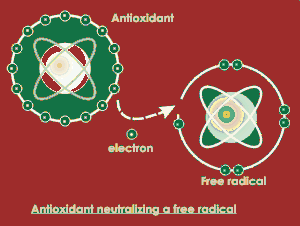 Antioxident fights free radicals
Tomato antioxidant chemicals will be able to
prevent cell damage in the body.
Avacado to fight Free Radicials
Antioxident fights free radicals
Tomato antioxidant chemicals will be able to
prevent cell damage in the body.
Avacado to fight Free Radicials
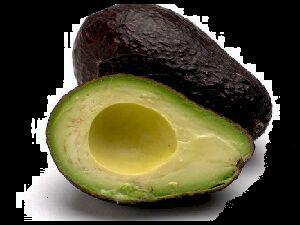 Avacado will reduce your free radicals and
keep you from a bad heart condition
higher intakes of these antioxiden type of foods
and vitamins from your diet will have lower rates
of various diseases, including heart disease, cancer,
Alzheimer's disease, diabetes and cataracts. Link
Avacado will reduce your free radicals and
keep you from a bad heart condition
higher intakes of these antioxiden type of foods
and vitamins from your diet will have lower rates
of various diseases, including heart disease, cancer,
Alzheimer's disease, diabetes and cataracts. Link
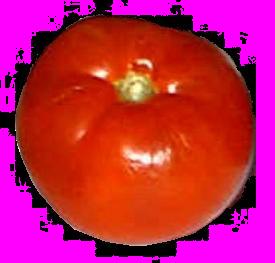 fight cancer by eating tomatoes
Gamers add 10+ years to a Healthy life with the steps below:
Here is the low down if you haven't had the chance to talk to the smartest
Doctors in the world yet...
Note: See a Doctor before attempting any of the below tips to stay healthy
and strong up to the age of 100 years old. I am not a Doctor but have put
together some useful tips from my Doctor for living a healthier, longer life.
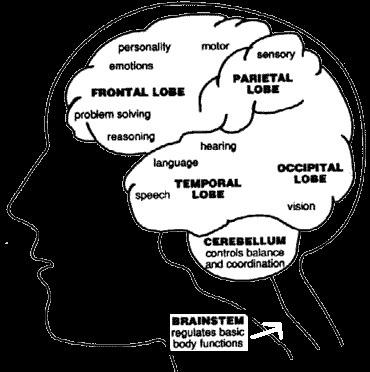 Let's take a look at the Brain
What is harmful to your heart is also harmful to your brain and will slow down
your reaction time and speed as well as endurance. Saturated fats clog arteries
that lead to your brain, putting you at an increased risk of stroke while omega-3
fatty acids those fats found in fish are helpful to the brain because they help
keep your arteries clear. They also alter your neurotransmitters and reduce
depression.
Antioxidants are specific vitamins, minerals, enzymes, amino acids and peptides
whose job are to combine with these reactive free radicals, neutralize them,
and consequently sacrifice themselves to prevent the free radicals from doing
cellular damage. It is ironic that oxygen which every human needs to survive
is the actual cause of organ disease in the form of free radicals. You neutralize
free radicals by staying away from toxins in the environment such as toxins in the
water, eating bad foods with no nutritional value, polluted air and harmful
ultraviolet rays of the sun. Antioxidants are compounds that protect cells
against the damaging effects of reactive oxygen species, such as singlet oxygen,
superoxide, peroxyl radicals, hydroxyl radicals and peroxynitrite.
Anti-Oxidant Defense System: The Antioxidant defense nutrients consist of
Vitamins A, C, E, and beta-carotene, bioflavinoids like pycnogenol, Dimethyglycine
(Vitamin B15) the minerals selenium, zinc, copper, magnesium, iron and peptide glutathione.
Vitamin C as an anti-oxident Link
Vitamins B1, B2, B6, B12 and clorine are cofactors necessary for synthesis
of anti-oxidant enzymes by the body.
Antioxidants are known to block prostaglandins and consequently reduce inflammation.
Best foods to fight free radicals and to help your brain and heart:
1. Nuts - contain monounsaturated fats to keep arteries clear and
as well as levels of precursors of serotonin to boost mood.
Recommendation Amount: 1 ounce a day - 12 walnuts or 24 almonds.
They have a calorie overload so use sparingly.
2. Fish - Contain artery clearing omega-3 fatty acids. Recommendation Amount:
13.5 ounces or three servings of fish. (Types: wild salmon, whitefish,
tilapia, catfish, flounder, mahi mahi)
3. Soybeans - Contain heart and artery-healthy protein, fiber, and fats.
Recommendation Amount: 1 cup a day.
4. Tomato juice - Contains foliate, lycopene, and other nutrients to keep arteries
young. 8 ounces a day of juice.
5. Olive oil, nut oils, fish oils, flaxseed, avocados - Contain heart healthy
Monounsaturated fats. 25% of daily calories a day should be healthy
fats.
6. Real (cocoa-based) chocolate - Increases dopamine release and provides flavonoids,
which keep arteries young. Recommendation Amount: (1 ounce a day.)
7. Tomato Products - Help fight cancer. Recommendation: 10 or more tablespoons
or tomato or spaghetti sauce.
8. Grapefruit juice - Some Doctors say it will decrease your risk of heart disease by
at least 10%. (Great amounts of vitamin C) Great for the immune system.
9. What not to eat - Stay away from high salt and high sugar processed foods.
General List of Healthy Foods:
List of Healthy Foods:
1. Oatmeal
2. Tomatoes
3. Grapefruit
4. Walnuts
5. Broccoli
6. Spinach
7. Beats
8. Bananas
9. Avocado
10. Romaine Lettuce
11. Milk
12. Oranges
13. Cantaloupe
14. Celery
15. Carrots
16. Cashews
17. Watermelon
18. Corn
19. Rhubarb Root
20. Soy Beans
21. Spiralina Tea
22. Comfrey Tea
23. Potato - Plain
===============================================
No red Meat
No bread
No Pasta
No Candy or any sweet drinks (Sugar)
No salt
Black Pepper is good for you
Deep Breathing is good
Walking up steep hills is good
The most important nutrients to get the proper immune system response are Selenium,
Dimethyglicine, A, C, E and Beta-carotene and are all anti-inflammatory and immune
stimulatory.
Free radicals cause accelerated aging and disease.
Best exercises for the brain and heart:
1. Resistance Training - Benefits to weight training: Lean muscle mass which over
time consumes more calories than fat and keeps your weight down.
Increasing the strength of your lower back is the top way to avoid
lower back pain. This also reduces the aging of your heart, arteries
and immune systems. Weight training builds bones and bone density to
prevent osteoporosis. Bones will form a response to stress, so when
muscles pull on the bones during weight lifting, they stimulate the
bone to increase its density making resistance training a bone-
stimulating activity.
This can be a light exercise where your body has some type of weight
bearing resistance exercise. Recommendation: Light to Medium Dumbbells,
an exercise machine, pushing and pulling exercise tubes or bands or
even using your own body weight. Your never to fat to exercise. Your
body needs exercise as much as it needs healthy food. Walk five minutes
a day and increase by two minutes every day until you are at 1 hour a
day of walking.
Weight Training: With weights in your hands: Squats, Lunges and Bent
over back rows. One leg calf lift, push-ups and
crunches (like sit-ups) Arm and leg lifts, Chess Press,
Biceps Curl, Standing Side lift, rotator-cuff rotation,
overhead press and lateral deltoid lift. Do not walk
with weights because it throws off your gait. Yoga is
very good for your flexibility.
Nintendo Video Game
Let's take a look at the Brain
What is harmful to your heart is also harmful to your brain and will slow down
your reaction time and speed as well as endurance. Saturated fats clog arteries
that lead to your brain, putting you at an increased risk of stroke while omega-3
fatty acids those fats found in fish are helpful to the brain because they help
keep your arteries clear. They also alter your neurotransmitters and reduce
depression.
Antioxidants are specific vitamins, minerals, enzymes, amino acids and peptides
whose job are to combine with these reactive free radicals, neutralize them,
and consequently sacrifice themselves to prevent the free radicals from doing
cellular damage. It is ironic that oxygen which every human needs to survive
is the actual cause of organ disease in the form of free radicals. You neutralize
free radicals by staying away from toxins in the environment such as toxins in the
water, eating bad foods with no nutritional value, polluted air and harmful
ultraviolet rays of the sun. Antioxidants are compounds that protect cells
against the damaging effects of reactive oxygen species, such as singlet oxygen,
superoxide, peroxyl radicals, hydroxyl radicals and peroxynitrite.
Anti-Oxidant Defense System: The Antioxidant defense nutrients consist of
Vitamins A, C, E, and beta-carotene, bioflavinoids like pycnogenol, Dimethyglycine
(Vitamin B15) the minerals selenium, zinc, copper, magnesium, iron and peptide glutathione.
Vitamin C as an anti-oxident Link
Vitamins B1, B2, B6, B12 and clorine are cofactors necessary for synthesis
of anti-oxidant enzymes by the body.
Antioxidants are known to block prostaglandins and consequently reduce inflammation.
Best foods to fight free radicals and to help your brain and heart:
1. Nuts - contain monounsaturated fats to keep arteries clear and
as well as levels of precursors of serotonin to boost mood.
Recommendation Amount: 1 ounce a day - 12 walnuts or 24 almonds.
They have a calorie overload so use sparingly.
2. Fish - Contain artery clearing omega-3 fatty acids. Recommendation Amount:
13.5 ounces or three servings of fish. (Types: wild salmon, whitefish,
tilapia, catfish, flounder, mahi mahi)
3. Soybeans - Contain heart and artery-healthy protein, fiber, and fats.
Recommendation Amount: 1 cup a day.
4. Tomato juice - Contains foliate, lycopene, and other nutrients to keep arteries
young. 8 ounces a day of juice.
5. Olive oil, nut oils, fish oils, flaxseed, avocados - Contain heart healthy
Monounsaturated fats. 25% of daily calories a day should be healthy
fats.
6. Real (cocoa-based) chocolate - Increases dopamine release and provides flavonoids,
which keep arteries young. Recommendation Amount: (1 ounce a day.)
7. Tomato Products - Help fight cancer. Recommendation: 10 or more tablespoons
or tomato or spaghetti sauce.
8. Grapefruit juice - Some Doctors say it will decrease your risk of heart disease by
at least 10%. (Great amounts of vitamin C) Great for the immune system.
9. What not to eat - Stay away from high salt and high sugar processed foods.
General List of Healthy Foods:
List of Healthy Foods:
1. Oatmeal
2. Tomatoes
3. Grapefruit
4. Walnuts
5. Broccoli
6. Spinach
7. Beats
8. Bananas
9. Avocado
10. Romaine Lettuce
11. Milk
12. Oranges
13. Cantaloupe
14. Celery
15. Carrots
16. Cashews
17. Watermelon
18. Corn
19. Rhubarb Root
20. Soy Beans
21. Spiralina Tea
22. Comfrey Tea
23. Potato - Plain
===============================================
No red Meat
No bread
No Pasta
No Candy or any sweet drinks (Sugar)
No salt
Black Pepper is good for you
Deep Breathing is good
Walking up steep hills is good
The most important nutrients to get the proper immune system response are Selenium,
Dimethyglicine, A, C, E and Beta-carotene and are all anti-inflammatory and immune
stimulatory.
Free radicals cause accelerated aging and disease.
Best exercises for the brain and heart:
1. Resistance Training - Benefits to weight training: Lean muscle mass which over
time consumes more calories than fat and keeps your weight down.
Increasing the strength of your lower back is the top way to avoid
lower back pain. This also reduces the aging of your heart, arteries
and immune systems. Weight training builds bones and bone density to
prevent osteoporosis. Bones will form a response to stress, so when
muscles pull on the bones during weight lifting, they stimulate the
bone to increase its density making resistance training a bone-
stimulating activity.
This can be a light exercise where your body has some type of weight
bearing resistance exercise. Recommendation: Light to Medium Dumbbells,
an exercise machine, pushing and pulling exercise tubes or bands or
even using your own body weight. Your never to fat to exercise. Your
body needs exercise as much as it needs healthy food. Walk five minutes
a day and increase by two minutes every day until you are at 1 hour a
day of walking.
Weight Training: With weights in your hands: Squats, Lunges and Bent
over back rows. One leg calf lift, push-ups and
crunches (like sit-ups) Arm and leg lifts, Chess Press,
Biceps Curl, Standing Side lift, rotator-cuff rotation,
overhead press and lateral deltoid lift. Do not walk
with weights because it throws off your gait. Yoga is
very good for your flexibility.
Nintendo Video Game
 This (is not) correct resistance training
Dance Dance Revolution Video Dance Machine
This (is not) correct resistance training
Dance Dance Revolution Video Dance Machine
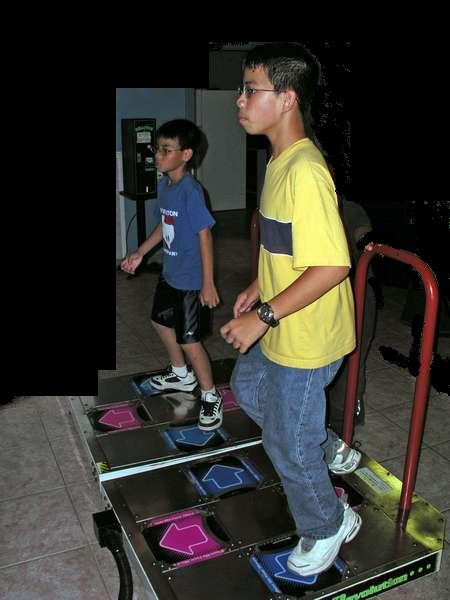 Dance Dance Revolution is good Aerobic Activity for the heart
 Girl Dancing, Very Aerobic and good for the heart
Typical Video Game Joystick
Girl Dancing, Very Aerobic and good for the heart
Typical Video Game Joystick
 moving a Neo Geo joystick back and forth (is not) considered enough Aerobic
Activity for the heart
Konami Boxing Video Game
moving a Neo Geo joystick back and forth (is not) considered enough Aerobic
Activity for the heart
Konami Boxing Video Game
 konami, Mocap Boxing is considered Aerobic
and healthy for the heart
Tooth Diagram Good Vs Bad Tooth Decay
konami, Mocap Boxing is considered Aerobic
and healthy for the heart
Tooth Diagram Good Vs Bad Tooth Decay
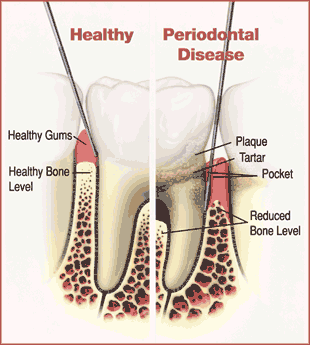 Teeth Maintenance is very important for long life
to keep serious disease from entering your body like
that of Gingivitis.
Last Tip
Floss - Do it every day to break up more than five hundred kinds of bacteria
that live in plaque between your teeth. This helps to reduce the inflammation associated
with gum disease. It will stop Gingivitis. This will decrease inflammation in your
gums will and subsequently in your arteries. Flossing will help you keep your
heart pumping and keep your teeth intact. Recommendation: Eat fibrous foods like
apples which help to avoid dry mouth which is a common cause of gingivitis. Scrape
your tongue as well, because that is where the bacteria hides, giving you bad breath.
Nutrition Action: Link
1999 Magazine Article:
What is an Antioxidant and does it hurt you or hurt you?
Antioxidant Definition:
Antioxidant
An antioxidant is a chemical that prevents the oxidation of other chemicals. In
biological systems, the normal processes of oxidation (plus a minor contribution
from ionizing radiation) produce highly reactive free radicals. These can readily
react with and damage other molecules: in some cases the body uses this to fight
infection. In other cases, the damage may be to the body's own cells. The presence
of extremely easily oxidisable compounds in the system can "mop up" free radicals
before they damage other essential molecules.
The following vitamins have shown positive antioxidant effects:
Retinol (Vitamin A or beta-carotene) has been discovered to protect dark green,
yellow and orange vegetables and fruits from solar radiation damage, and is thought
to play a similar role in human body. Carrots, squash, broccoli, sweet potatoes,
tomatoes, kale, collards, cantaloupe, peaches and apricots are particularly rich
sources of beta-carotene.
Ascorbic acid (Vitamin C) is a water-soluble compound that fulfills this role,
among others, in living systems. Important sources include citrus fruits (like
oranges, sweet lime, etc.), green peppers, broccoli, green leafy vegetables,
strawberries, raw cabbage and tomatoes.
Vitamin E (tocopherol) is fat soluble and protects lipids. Sources include wheat
germ, nuts, seeds, whole grains, green leafy vegetables, vegetable oil and
fish-liver oil. Selenium is best obtained through foods, as large doses of the
supplement form can be toxic. Good food sources include fish, shellfish, red meat,
grains, eggs, chicken, garlic, and brazil nuts. Vegetables can also be a good source
if grown in selenium-rich soils.
"Different antioxidant profiles in Italian centenarians: the Sardinian peculiarity"
A case study of 153 Italian centenarians, the main result of this study is that, whereas
in Italian population elevated levels of plasma vitamins A and E seem to be important for
longevity.
E Vitamin is great for cuts and scrapes and skin related problems like Dry and Itchy Skin
sun burns or to clear up skin lesions. It is a great healer of the skin.
H20 = Water: toxins in the water:
Reverse Osmosis - It is the same as drinking pure mother nature's rain water:
Most drinking water contains arsenic, fluoride, chlorine and a host of other unhealthy toxins
which can cause cancer.
Most would agree that drinking unfiltered tap water could be hazardous to your health
because of things like parasites, chlorine, fluoride, dioxins, cryptosporidium, mercury,
nitrates, microbes, heavy metals, all radioactive materialssynthetic chemicals such
as herbicides, pesticides and pharmaceutical contaminants (Drugs).
Bad tap water or well water can hurt you and even bottled water does not have the
scrutiny it should have with the FDA Administration. Solution - Reverse Osmosis system
The reverse osmosis is most commonly known for its use in drinking water purification.
Reverse Osmosis is a revolutionary water treatment technology that was first developed in
the late 1950's as a method of desalinating sea water. Also known as hyperfiltration, reverse
osmosis and is now used for homes in which the water has contaminates not wanted.
It is used to remove chemicals and bad tastes and odors plus a very tight semi-permeable
membrane to reduce "dissolved solids" like sodium as well as heavy metal contaminants
like lead, aluminum and arsenic. Unlike most standard water filters, RO units also remove
fluoride and nitrates
(RO) Reverse osmosis "hyperfiltration" involves a diffusive mechanism so that separation
efficiency is dependent on solute concentration, pressure, and water flux rate. The process
of osmosis through semipermeable membranes giving clean drinkable water. The reverse osmosis
system is commonly used for improving water quality for drinking and cooking, removing
Chloramines with charcoal filters and removing other contaminates with the RO membrane.
Does the Reverse Osmosis system take out beneficial vitamins or minerals?
You get most of your minerals from food, which provides organic, easily assimilated minerals.
Human beings need organic minerals which are only available from living organisms like plants
and vegetables and are easily absorbed by our systems. The human body is a sophisticated
instrument capable of adapting to a wide range of circumstances and capable of thriving in
areas having water of high or low mineral content. As long as water is palatable, it's within
the body's acceptable range.
Antioxidants:
Antioxidant vitamins are a group of dietary substances which protect cells and tissues
from oxidative damage which will fight the damage already done of illnesses such as
degenerative organ disease (kidney failure, liver failure, congestive heart failure,
allergies, cancer, autoimmune deficiency diseases, and chronic inflammation diseases
like arthritis. Antioxidants operate by neutralizing the damaging effects of unstable
compounds called "free radicals", which are naturally produced in the body and also
derived from outside sources (such as cigarette smoking).
Antioxidant Foods
Pineapple
It suppresses inflammation due to Bromelain, an antibacterial enzyme. Pineapple aids
digestion and helps to dissolve blood clots, and is food for preventing osteoporosis
and bone fractures because of its very high manganese content. It is also antibacterial,
antiviral and mildly estrogenic.
Eating Tips: Eat fresh
Fruits and vegetables supply antioxidants other than those you can get from pills,
say researchers at the USDA's Jean Mayer Human Nutrition Research Center on Aging
at Tufts University in Boston.
Ron Prior and co-workers fed 36 men and women aged 20 to 40 or 60 to 80 a diet
containing ten servings of fruits and vegetables a day. Then they measured the
"antioxidant capacity" of the participants' blood samples by seeing how well the
blood deactivated damaging oxidized free radicals in a test tube.
After two weeks, the antioxidant capacity of the participants' blood rose
in both groups, though more consistently in the older people.
"Based on this and other studies, it appears that compounds other than
vitamins C and E and carotenoids contribute a major portion of the
increase in antioxidant capacity," says Prior. Among the foods with the
highest antioxidant capacity were oranges, cauliflower, and peas.
In a separate study from the Johns Hopkins Medical Institutions in Baltimore,
researchers found a higher antioxidant capacity in 83 people who ate eight to
ten servings of fruits and vegetables a day than in 40 others who ate fewer
servings.
-Bonnie Liebman
Free Radical:
What is a free radicial and does it help you or hurt you?
When living cells become oxidized which is bad. This is when aging cell damage and
disease occurs. Another name for this process is "oxygen toxicity". This oxidation
process which hurts our body tissues occurs as a result of "free radicals" damaging
the cells outer membrane and inner nucleus. Free radicals are highly reactive,
unstable charged atoms and molecules that attempt to combine with molecules of the
cell structure consequently damage the cell.
You need to fight the dangerous Free Radicals that can kill you.
Free radicals are unstable molecules created by poor diet, stress, pesticides,
pollution, electronic devices and even naturally, by the normal biological
processes of the body. A free radical attaches itself to a stable molecule
within the body and damaging the surrounding cells. After the stable molecule
loses its electron it becomes a free radical.
This continuous chain results in cellular damage to the body, allowing disease and
premature degeneration to take place. The proliferation of free radicals has been
linked to over 80 health conditions. Antioxidants help to neutralize free radicals.
Edlers Long Life
From Newspaper Article
Edith Ribordy
Born: Jan. 12, 1906, Chicago.
Family: son Tom Reynolds, 79; daughters Barbara Barney, 76, Kit Reynolds,
age 74, Nancy Bartlett, 71, Cynthia Reynolds, 64, and Susan Lister, 62; 20
grandchildren and 35 great-grandchildren.
Hobbies: Playing the washboard, reading the paper daily, studying politics,
following Tiger Woods.
Tips on living a long life: "Eat oatmeal, and live where it's warm."
Edith Ribordy
Celebrates 102nd birthday
Ribordy did a lot of reminiscing in the days leading up to her 102nd birthday
Saturday at Atria Woodbridge, the assisted living community she has called home
since June. She was surrounded by scores of children, grandchildren and
great-grandchildren who traveled from all over the country to celebrate with
the formidable centenarian.
Born Edith Pillatt to Scottish and English immigrants, Ribordy graduated from the
University of Illinois in 1927, earning a bachelor's degree in health.
Ribordy was persuaded to move to California to be near daughter Cynthia Reynolds of
Costa Mesa.
"I need to be near a blood relative," she explained.
Ribordy's family credits her interest in the world around her for keeping her
young. She reads the paper every day without fail; she takes music and exercise
classes at Atria; she plays the washboard, and has performed at Dixieland jazz
festivals across the country; and she idolizes Tiger Woods, clipping articles
and learning all she can about the golfer. Her favorite authors include Agatha
Christie and Charles Dickens, and she attends services at a nearby Methodist
church.
"Mom is a woman of great faith but she never talks about it, she just lives it,"
said daughter Kit Reynolds, 74, a retired priest. "She gave us all the gift of
faith."
Ribordy modestly brushes off such praise but is happy to share her tips for
living a long, healthy life. Ribordy modestly brushes off such praise but is
happy to share her tips for living a long, healthy life.
"Eat oatmeal," she said. "And live where it's warm."
oatmeal secret to long life, 112-year-old said
By Carrie Rietsma | Morris News Service
HASTINGS, Mich. - Marcella Humphrey always claimed the secret to long life
was eating oatmeal.
"That's what she thinks helped her," chuckled her 85-year-old daughter,
Francis Richards.
"I get kinda tired of the stuff myself."
Humphrey should have known. The Hastings woman lived to be 112 and become one
of Michigan's oldest residents before her death Sunday.
Humphrey was born Oct. 25, 1892, in Brown Deer, near Milwaukee, Wis.
She saw the car replace the horse and buggy and radios, telephones, televisions,
and personal computers become staples in the American home.
She was 11 when Orville and Wilbur Wright successfully launched their "flying
machine" in December 1903, and she was 76 when man walked on the surface of
the moon in July 1969.
"Nowadays, I sometimes hear mothers complain about the cost of diapers and
having to buy canned baby food," Richards said. "My mother had to make the
canned food. She had to cut diapers out of flannel and sew the edges up."
That was quite a chore for a woman raising 10 children.
Humphrey and her husband, George, raised their five boys and five girls on
a farm. Richards, the oldest child, said her mother stayed busy working on
the farm, doing chores, sewing clothing and caring for the children.
"She was a good cook," she said with a smile. "When you came home from school
and opened the door, it was the most wonderful smell in the world. She was
always baking bread and rolls."
Humphrey also enjoyed fishing, riding horses and painting pictures.
Humphrey moved to Michigan after she met her husband. The couple worked 26 acres
of land, raising livestock, fruits and vegetables, and hay for their horses.
Their children learned the value of hard work at an early age, especially on
canning day.
"I dreaded that day," Richards said. "It was a big, hard day of work, but we
had plenty of fruit in the winter, anyway."
All five of Humphrey's sons served in World War II. Three of her daughters
also served as nurses in the war. All the children returned home safely.
Her 10 children eventually married and had children of their own. It is estimated
that the total of grandchildren, great-grandchildren and great-great-grandchildren
of Humphrey exceeds 240. Studies have shown that dietary fiber - including foods
such as apples, barley, beans and other legumes, fruits and vegetables,
oatmeal, oat bran and brown rice -- clearly lower blood cholesterol.
High-fiber foods are also digested more slowly, so they don't cause spikes in
blood sugar levels like white bread, potatoes and sweets do. Of course, everyone
knows that fiber helps keep you regular, but so do laxatives. Fiber, however, has
an added plus: High-fiber foods help us feel full, making it easier to control
weight.
Low-calorie diets demonstrated 70 percent of the anti-aging effects of the test
animals that had been on a long-term reduced-calorie diet.
A waist line of more than 40 inches in men increases heart risk.
Antioxidant "Superfoods" to Protect Your Cells and Heart
When you're thinking "superfoods," think color, says Beverly Clevidence, PhD,
a research leader at the USDA's Diet and Human Performance Laboratory. That means
foods that are deep blue, purple, red, green, or orange. The carotenoids and
anthocyanins that provide the color for these foods contain health-enhancing
nutrients that protect against heart disease and cancer.
Teeth Maintenance is very important for long life
to keep serious disease from entering your body like
that of Gingivitis.
Last Tip
Floss - Do it every day to break up more than five hundred kinds of bacteria
that live in plaque between your teeth. This helps to reduce the inflammation associated
with gum disease. It will stop Gingivitis. This will decrease inflammation in your
gums will and subsequently in your arteries. Flossing will help you keep your
heart pumping and keep your teeth intact. Recommendation: Eat fibrous foods like
apples which help to avoid dry mouth which is a common cause of gingivitis. Scrape
your tongue as well, because that is where the bacteria hides, giving you bad breath.
Nutrition Action: Link
1999 Magazine Article:
What is an Antioxidant and does it hurt you or hurt you?
Antioxidant Definition:
Antioxidant
An antioxidant is a chemical that prevents the oxidation of other chemicals. In
biological systems, the normal processes of oxidation (plus a minor contribution
from ionizing radiation) produce highly reactive free radicals. These can readily
react with and damage other molecules: in some cases the body uses this to fight
infection. In other cases, the damage may be to the body's own cells. The presence
of extremely easily oxidisable compounds in the system can "mop up" free radicals
before they damage other essential molecules.
The following vitamins have shown positive antioxidant effects:
Retinol (Vitamin A or beta-carotene) has been discovered to protect dark green,
yellow and orange vegetables and fruits from solar radiation damage, and is thought
to play a similar role in human body. Carrots, squash, broccoli, sweet potatoes,
tomatoes, kale, collards, cantaloupe, peaches and apricots are particularly rich
sources of beta-carotene.
Ascorbic acid (Vitamin C) is a water-soluble compound that fulfills this role,
among others, in living systems. Important sources include citrus fruits (like
oranges, sweet lime, etc.), green peppers, broccoli, green leafy vegetables,
strawberries, raw cabbage and tomatoes.
Vitamin E (tocopherol) is fat soluble and protects lipids. Sources include wheat
germ, nuts, seeds, whole grains, green leafy vegetables, vegetable oil and
fish-liver oil. Selenium is best obtained through foods, as large doses of the
supplement form can be toxic. Good food sources include fish, shellfish, red meat,
grains, eggs, chicken, garlic, and brazil nuts. Vegetables can also be a good source
if grown in selenium-rich soils.
"Different antioxidant profiles in Italian centenarians: the Sardinian peculiarity"
A case study of 153 Italian centenarians, the main result of this study is that, whereas
in Italian population elevated levels of plasma vitamins A and E seem to be important for
longevity.
E Vitamin is great for cuts and scrapes and skin related problems like Dry and Itchy Skin
sun burns or to clear up skin lesions. It is a great healer of the skin.
H20 = Water: toxins in the water:
Reverse Osmosis - It is the same as drinking pure mother nature's rain water:
Most drinking water contains arsenic, fluoride, chlorine and a host of other unhealthy toxins
which can cause cancer.
Most would agree that drinking unfiltered tap water could be hazardous to your health
because of things like parasites, chlorine, fluoride, dioxins, cryptosporidium, mercury,
nitrates, microbes, heavy metals, all radioactive materialssynthetic chemicals such
as herbicides, pesticides and pharmaceutical contaminants (Drugs).
Bad tap water or well water can hurt you and even bottled water does not have the
scrutiny it should have with the FDA Administration. Solution - Reverse Osmosis system
The reverse osmosis is most commonly known for its use in drinking water purification.
Reverse Osmosis is a revolutionary water treatment technology that was first developed in
the late 1950's as a method of desalinating sea water. Also known as hyperfiltration, reverse
osmosis and is now used for homes in which the water has contaminates not wanted.
It is used to remove chemicals and bad tastes and odors plus a very tight semi-permeable
membrane to reduce "dissolved solids" like sodium as well as heavy metal contaminants
like lead, aluminum and arsenic. Unlike most standard water filters, RO units also remove
fluoride and nitrates
(RO) Reverse osmosis "hyperfiltration" involves a diffusive mechanism so that separation
efficiency is dependent on solute concentration, pressure, and water flux rate. The process
of osmosis through semipermeable membranes giving clean drinkable water. The reverse osmosis
system is commonly used for improving water quality for drinking and cooking, removing
Chloramines with charcoal filters and removing other contaminates with the RO membrane.
Does the Reverse Osmosis system take out beneficial vitamins or minerals?
You get most of your minerals from food, which provides organic, easily assimilated minerals.
Human beings need organic minerals which are only available from living organisms like plants
and vegetables and are easily absorbed by our systems. The human body is a sophisticated
instrument capable of adapting to a wide range of circumstances and capable of thriving in
areas having water of high or low mineral content. As long as water is palatable, it's within
the body's acceptable range.
Antioxidants:
Antioxidant vitamins are a group of dietary substances which protect cells and tissues
from oxidative damage which will fight the damage already done of illnesses such as
degenerative organ disease (kidney failure, liver failure, congestive heart failure,
allergies, cancer, autoimmune deficiency diseases, and chronic inflammation diseases
like arthritis. Antioxidants operate by neutralizing the damaging effects of unstable
compounds called "free radicals", which are naturally produced in the body and also
derived from outside sources (such as cigarette smoking).
Antioxidant Foods
Pineapple
It suppresses inflammation due to Bromelain, an antibacterial enzyme. Pineapple aids
digestion and helps to dissolve blood clots, and is food for preventing osteoporosis
and bone fractures because of its very high manganese content. It is also antibacterial,
antiviral and mildly estrogenic.
Eating Tips: Eat fresh
Fruits and vegetables supply antioxidants other than those you can get from pills,
say researchers at the USDA's Jean Mayer Human Nutrition Research Center on Aging
at Tufts University in Boston.
Ron Prior and co-workers fed 36 men and women aged 20 to 40 or 60 to 80 a diet
containing ten servings of fruits and vegetables a day. Then they measured the
"antioxidant capacity" of the participants' blood samples by seeing how well the
blood deactivated damaging oxidized free radicals in a test tube.
After two weeks, the antioxidant capacity of the participants' blood rose
in both groups, though more consistently in the older people.
"Based on this and other studies, it appears that compounds other than
vitamins C and E and carotenoids contribute a major portion of the
increase in antioxidant capacity," says Prior. Among the foods with the
highest antioxidant capacity were oranges, cauliflower, and peas.
In a separate study from the Johns Hopkins Medical Institutions in Baltimore,
researchers found a higher antioxidant capacity in 83 people who ate eight to
ten servings of fruits and vegetables a day than in 40 others who ate fewer
servings.
-Bonnie Liebman
Free Radical:
What is a free radicial and does it help you or hurt you?
When living cells become oxidized which is bad. This is when aging cell damage and
disease occurs. Another name for this process is "oxygen toxicity". This oxidation
process which hurts our body tissues occurs as a result of "free radicals" damaging
the cells outer membrane and inner nucleus. Free radicals are highly reactive,
unstable charged atoms and molecules that attempt to combine with molecules of the
cell structure consequently damage the cell.
You need to fight the dangerous Free Radicals that can kill you.
Free radicals are unstable molecules created by poor diet, stress, pesticides,
pollution, electronic devices and even naturally, by the normal biological
processes of the body. A free radical attaches itself to a stable molecule
within the body and damaging the surrounding cells. After the stable molecule
loses its electron it becomes a free radical.
This continuous chain results in cellular damage to the body, allowing disease and
premature degeneration to take place. The proliferation of free radicals has been
linked to over 80 health conditions. Antioxidants help to neutralize free radicals.
Edlers Long Life
From Newspaper Article
Edith Ribordy
Born: Jan. 12, 1906, Chicago.
Family: son Tom Reynolds, 79; daughters Barbara Barney, 76, Kit Reynolds,
age 74, Nancy Bartlett, 71, Cynthia Reynolds, 64, and Susan Lister, 62; 20
grandchildren and 35 great-grandchildren.
Hobbies: Playing the washboard, reading the paper daily, studying politics,
following Tiger Woods.
Tips on living a long life: "Eat oatmeal, and live where it's warm."
Edith Ribordy
Celebrates 102nd birthday
Ribordy did a lot of reminiscing in the days leading up to her 102nd birthday
Saturday at Atria Woodbridge, the assisted living community she has called home
since June. She was surrounded by scores of children, grandchildren and
great-grandchildren who traveled from all over the country to celebrate with
the formidable centenarian.
Born Edith Pillatt to Scottish and English immigrants, Ribordy graduated from the
University of Illinois in 1927, earning a bachelor's degree in health.
Ribordy was persuaded to move to California to be near daughter Cynthia Reynolds of
Costa Mesa.
"I need to be near a blood relative," she explained.
Ribordy's family credits her interest in the world around her for keeping her
young. She reads the paper every day without fail; she takes music and exercise
classes at Atria; she plays the washboard, and has performed at Dixieland jazz
festivals across the country; and she idolizes Tiger Woods, clipping articles
and learning all she can about the golfer. Her favorite authors include Agatha
Christie and Charles Dickens, and she attends services at a nearby Methodist
church.
"Mom is a woman of great faith but she never talks about it, she just lives it,"
said daughter Kit Reynolds, 74, a retired priest. "She gave us all the gift of
faith."
Ribordy modestly brushes off such praise but is happy to share her tips for
living a long, healthy life. Ribordy modestly brushes off such praise but is
happy to share her tips for living a long, healthy life.
"Eat oatmeal," she said. "And live where it's warm."
oatmeal secret to long life, 112-year-old said
By Carrie Rietsma | Morris News Service
HASTINGS, Mich. - Marcella Humphrey always claimed the secret to long life
was eating oatmeal.
"That's what she thinks helped her," chuckled her 85-year-old daughter,
Francis Richards.
"I get kinda tired of the stuff myself."
Humphrey should have known. The Hastings woman lived to be 112 and become one
of Michigan's oldest residents before her death Sunday.
Humphrey was born Oct. 25, 1892, in Brown Deer, near Milwaukee, Wis.
She saw the car replace the horse and buggy and radios, telephones, televisions,
and personal computers become staples in the American home.
She was 11 when Orville and Wilbur Wright successfully launched their "flying
machine" in December 1903, and she was 76 when man walked on the surface of
the moon in July 1969.
"Nowadays, I sometimes hear mothers complain about the cost of diapers and
having to buy canned baby food," Richards said. "My mother had to make the
canned food. She had to cut diapers out of flannel and sew the edges up."
That was quite a chore for a woman raising 10 children.
Humphrey and her husband, George, raised their five boys and five girls on
a farm. Richards, the oldest child, said her mother stayed busy working on
the farm, doing chores, sewing clothing and caring for the children.
"She was a good cook," she said with a smile. "When you came home from school
and opened the door, it was the most wonderful smell in the world. She was
always baking bread and rolls."
Humphrey also enjoyed fishing, riding horses and painting pictures.
Humphrey moved to Michigan after she met her husband. The couple worked 26 acres
of land, raising livestock, fruits and vegetables, and hay for their horses.
Their children learned the value of hard work at an early age, especially on
canning day.
"I dreaded that day," Richards said. "It was a big, hard day of work, but we
had plenty of fruit in the winter, anyway."
All five of Humphrey's sons served in World War II. Three of her daughters
also served as nurses in the war. All the children returned home safely.
Her 10 children eventually married and had children of their own. It is estimated
that the total of grandchildren, great-grandchildren and great-great-grandchildren
of Humphrey exceeds 240. Studies have shown that dietary fiber - including foods
such as apples, barley, beans and other legumes, fruits and vegetables,
oatmeal, oat bran and brown rice -- clearly lower blood cholesterol.
High-fiber foods are also digested more slowly, so they don't cause spikes in
blood sugar levels like white bread, potatoes and sweets do. Of course, everyone
knows that fiber helps keep you regular, but so do laxatives. Fiber, however, has
an added plus: High-fiber foods help us feel full, making it easier to control
weight.
Low-calorie diets demonstrated 70 percent of the anti-aging effects of the test
animals that had been on a long-term reduced-calorie diet.
A waist line of more than 40 inches in men increases heart risk.
Antioxidant "Superfoods" to Protect Your Cells and Heart
When you're thinking "superfoods," think color, says Beverly Clevidence, PhD,
a research leader at the USDA's Diet and Human Performance Laboratory. That means
foods that are deep blue, purple, red, green, or orange. The carotenoids and
anthocyanins that provide the color for these foods contain health-enhancing
nutrients that protect against heart disease and cancer.
 Total Cholesterol Levels:
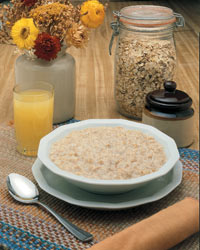
Eat Oatmeal Every Morning
Total Cholesterol Levels:
Eat Oatmeal Every Morning
 Lipoproteins Testing (Lipids) for Cholesterol Levels:
Measuring blood fats is an important tool in determining your risk of
cardiovascular disease. A lipid panel is a series of tests used to determine
the amount of fat in your blood. There are four major fat components that will
be listed on your lipid panel:
When you get a lipid panel, there are three main types of cholesterol that are
tested: low density lipoprotein (LDL), high density lipoprotein (HDL), and very
low density lipoprotein (VLDL). Triglycerides.
How Does Oatmeal Help Lower Cholesterol?
It is thought that the oat fibers in oatmeal mix with cholesterol in the small
intestine, then bind to the cholesterol molecules and carry it out of the body
-- instead of it being absorbed into the blood. Link
Oats and oat bran – The soluble fiber found in oats and oat bran has been
shown to help reduce LDL (bad) cholesterol when eaten as part of a heart
healthy diet. Link
In 1997, the U.S. Food and Drug Administration granted the first food-specific
health claim to Quaker Oats for soluble fiber in oatmeal and its heart-health
benefits.
Why is it Important to Lower LDL (bad) Cholesterol Levels?
In the past 10 years, clinical trials have conclusively demonstrated that lowering
LDL cholesterol reduces heart attacks and saves lives. The benefits of lowering LDL
cholesterol include:
Reducing the formation of new cholesterol plaques;
Eliminating existing plaques;
Preventing rupture of existing plaques;
Decreasing the risk of heart attacks
LDL (Bad) Cholesterol = Less Than 200 MG
LDL: (Good) Cholesterol = 60 MG or More
Triglycerides = Less than 150 MG
Some Facts about what problems occur when not watching your Cholesterol:
Blood Clots and the Heart and Cholesterol:
A Blood clot could form blocking the coronary artery of the heart. This happens
by having fatty cholesterol turn into plaque when the cholesterol is engulfed by
the blood cells - creating plaque. This plaque blocks the passage of fresh blood
travel in the coronary artery, which then causes a rupture at the inside of the
coronary artery causing a blood clot stopping all blood flow to the heart,
resulting in a heart attack.
With the heart no longer pumping blood because of blockage, there are no more
blood cells supplying oxygen for the brain with the essential oxygen for life,
and brain cells can no longer survive without the oxygen carrying blood circulating
throughout the body, causing brain cells to die rapidly.
Arterioscelerosis: This is an Aneurism of the Aorta is caused from hardening of the
arteries. Cholesterol Deposits in the walls cause hardening of the arteries and
the walls begin to rupture at the weak spots. A stint is needed to stop the artery
from rupturing.
Important Measurements for the Heart:
Systolic Pressure: This is the measurement of blood pressure as the heart
contracts and is at its peak of pressure pressing against the blood vessel
walls.
Systolic Pressure: The measurement should be below 120.
Diastic: This is a measurement of the blood pressure as the heart at the
time the heart is at rest between beats, or resting. Measurement is of the
blood vessel wall and its pressure pressing to the outside of this blood
vessel.
Diastoic Pressure: The measurement should be below 80.
Properly eating foods that are good for you and exercise can significantly
reduce these numbers to a healthy measurement and diagnositc number for a long
and healthy life.
Be a friend to many and laugh and love and live life as if every day was its last
as life is what we put into it and can give much pleasure as we love others and
are loved!
Fitness:
For a healthy heart, take a brisk walk every morning, long enough to get
your heart rate up for a minimum of 25 minutes and drink lots of water
to flush your system.
Stay Away From Certain Foods:
What common foods should you "NOT" eat and "Stay Away" from because we
tend to over indulge in all of the menu items listed below:
Lipoproteins Testing (Lipids) for Cholesterol Levels:
Measuring blood fats is an important tool in determining your risk of
cardiovascular disease. A lipid panel is a series of tests used to determine
the amount of fat in your blood. There are four major fat components that will
be listed on your lipid panel:
When you get a lipid panel, there are three main types of cholesterol that are
tested: low density lipoprotein (LDL), high density lipoprotein (HDL), and very
low density lipoprotein (VLDL). Triglycerides.
How Does Oatmeal Help Lower Cholesterol?
It is thought that the oat fibers in oatmeal mix with cholesterol in the small
intestine, then bind to the cholesterol molecules and carry it out of the body
-- instead of it being absorbed into the blood. Link
Oats and oat bran – The soluble fiber found in oats and oat bran has been
shown to help reduce LDL (bad) cholesterol when eaten as part of a heart
healthy diet. Link
In 1997, the U.S. Food and Drug Administration granted the first food-specific
health claim to Quaker Oats for soluble fiber in oatmeal and its heart-health
benefits.
Why is it Important to Lower LDL (bad) Cholesterol Levels?
In the past 10 years, clinical trials have conclusively demonstrated that lowering
LDL cholesterol reduces heart attacks and saves lives. The benefits of lowering LDL
cholesterol include:
Reducing the formation of new cholesterol plaques;
Eliminating existing plaques;
Preventing rupture of existing plaques;
Decreasing the risk of heart attacks
LDL (Bad) Cholesterol = Less Than 200 MG
LDL: (Good) Cholesterol = 60 MG or More
Triglycerides = Less than 150 MG
Some Facts about what problems occur when not watching your Cholesterol:
Blood Clots and the Heart and Cholesterol:
A Blood clot could form blocking the coronary artery of the heart. This happens
by having fatty cholesterol turn into plaque when the cholesterol is engulfed by
the blood cells - creating plaque. This plaque blocks the passage of fresh blood
travel in the coronary artery, which then causes a rupture at the inside of the
coronary artery causing a blood clot stopping all blood flow to the heart,
resulting in a heart attack.
With the heart no longer pumping blood because of blockage, there are no more
blood cells supplying oxygen for the brain with the essential oxygen for life,
and brain cells can no longer survive without the oxygen carrying blood circulating
throughout the body, causing brain cells to die rapidly.
Arterioscelerosis: This is an Aneurism of the Aorta is caused from hardening of the
arteries. Cholesterol Deposits in the walls cause hardening of the arteries and
the walls begin to rupture at the weak spots. A stint is needed to stop the artery
from rupturing.
Important Measurements for the Heart:
Systolic Pressure: This is the measurement of blood pressure as the heart
contracts and is at its peak of pressure pressing against the blood vessel
walls.
Systolic Pressure: The measurement should be below 120.
Diastic: This is a measurement of the blood pressure as the heart at the
time the heart is at rest between beats, or resting. Measurement is of the
blood vessel wall and its pressure pressing to the outside of this blood
vessel.
Diastoic Pressure: The measurement should be below 80.
Properly eating foods that are good for you and exercise can significantly
reduce these numbers to a healthy measurement and diagnositc number for a long
and healthy life.
Be a friend to many and laugh and love and live life as if every day was its last
as life is what we put into it and can give much pleasure as we love others and
are loved!
Fitness:
For a healthy heart, take a brisk walk every morning, long enough to get
your heart rate up for a minimum of 25 minutes and drink lots of water
to flush your system.
Stay Away From Certain Foods:
What common foods should you "NOT" eat and "Stay Away" from because we
tend to over indulge in all of the menu items listed below:
1. Pizza (Cheese, Ground Beef, Pepperoni, Sausage, Canadian Bacon and Chicken)
Just say no - Pizza is bad for you.
2. High Fat Dressings on your Salad (Eat only Low Fat Dressings)
3. Ice Cream (All Flavors)
4. Orange Juice - Only eat a fresh Orange instead
5. Soda Beverages like Coke, Sprite - Instead drink Water.(Add squeezed lemon)
6. White Rice - It's a CARB. - you don't need or want
7. Potato Chips and/or French Fries - More CARBS - your body doesn't need this.
8. Cheese Burgers/Hamburgers
Fat intake is a concern-a 4-ounce cooked burger can contain
as many as 20 grams, up to half of that is saturated fat.
9. Baked Goods - Don't eat the crust, Stop eating when you hit the crust.
Don't eat the chocolate/vanilla frosting on top.
10. Sandwich Toppings - Get rid of the "cheese," "mayonnaise," "fattening
dressings", and "white bread".
11. Candy Bars - No more, eat fruit instead.
Order a flame-broiled chicken sandwich (not breaded) or Turkey with a
light salad (oil/vinegar) and light soup (minestrone) No heavy sauces.
"Carbohydrates, whether ingested as fruits, vegetables, grains or table sugar, all
end up in the body as glucose," says Diekman. "If you take in more sugar than
is necessary to support bodily activities, those carbs wind up as stored fat."
Fast Foods - Processed Foods
Fast Foods - Don't Eat them, they are the fast way to sickness.
Processed Foods - They do not have enough nutrients, don't eat them.
Soda - Has no nutritional value and is very unhealthy.
Raw Vegetables and Fruit will give you the vitamins you need to fight
off the many diseases that can be had by those who otherwise do not
watch what they eat. So don't fall into the fast foods trap of eating
on the run. Instead, bring a lunch box full of raw fruits and vegetables
to snack on throughout the day.
Lets all stay heatlhy!
Change your eating habits and add exercise daily - Walking is very beneficial
From a Prominent Death, Some Painful Truths Link
Health and Behavior Link
Daily porridge (oatmeal) for breakfast has kept Alec Holden going for a century
Link
Olive Oil
olive oil the elixir of old age
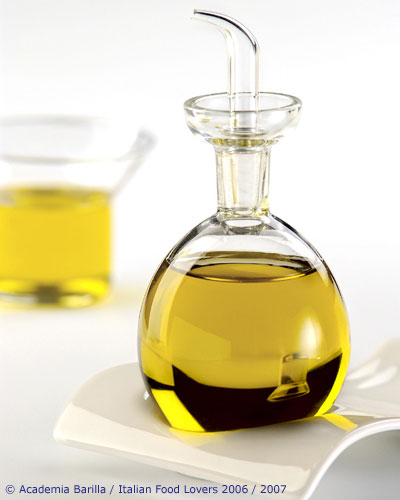 Does Olive Oil have the Fountain of Youth within it? Here are several case studies with Centarians:
Supercentenarian is defined as anyone who reaches the amazingly small club of 110 years of age, and
they seem to have a few other things in common, especially drinking Olive Oil.
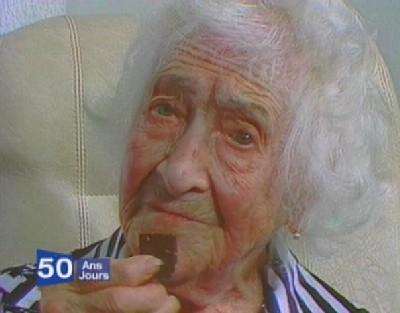
Jeanne Louise Calment. She lived to the staggering age of 122. Born on February 21, 1875, drinks
some Virgin Olive Oil - Everyday!
Does Olive Oil have the Fountain of Youth within it? Here are several case studies with Centarians:
Supercentenarian is defined as anyone who reaches the amazingly small club of 110 years of age, and
they seem to have a few other things in common, especially drinking Olive Oil.
Jeanne Louise Calment. She lived to the staggering age of 122. Born on February 21, 1875, drinks
some Virgin Olive Oil - Everyday!
 Jeanne Louise Calment - Age 117 Birthday Party
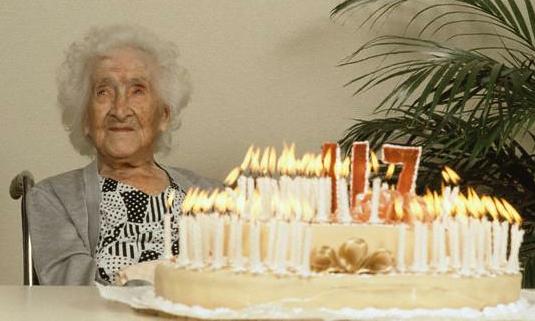 Jeanne Louise Calment - February 21, 1875 - August 4, 1997) reached the longest confirmed lifespan
in history at 122 years and 164 days. Her lifespan has been thoroughly documented by scientific study.
Born in Arles, France, to a well-to-do family, her close family members also lived to an advanced age:
her brother, François, lived to the age of 97, her father, Nicolas, 93, and her mother, Marguerite, 86.
http://en.wikipedia.org/wiki/Jeanne_Calment Link
According to her birth certificate, Calment was born on February 21, 1875, about 10 years after
U.S. President Abraham Lincoln was assassinated.
Fight Degenerative Diseases and Olive Oil
By Mary Kearl
Sure, you've heard about the benefits of olive oil as a source of heart-healthy fat, but could
making it a part of your regular diet be key to living disease-free longer? Or, just plain old
living longer? Well, if Mariam Amash, an Israeli citizen who reportedly drinks a glass of olive
oil a day, is as old as she says she is (120 years, which would make her the oldest recorded
living person) it may make you think twice about your own olive oil intake
Several studies have linked diets that include monounsaturated fats like extra-virgin olive oil
to reduced risk of heart disease.
Pick the purest olive oil. In order to maximize the health benefits of your olive oil intake, make
sure you buy extra-virgin olive oil, with an acidity level of 0.8 percent at the highest, says
Andy Bellatti, Masters candidate at NYU's Department of Nutrition, Food Studies, and Public Health.
http://www.aolhealth.com/healthy-living/aging-well/olive-oil-slows-aging Link
It's important that people prone to skin irritation and itchiness use a body moisturizing oil
like olive oil right after they get out of the shower or bath.
http://www.everydayhealth.com/senior-health-specialist/old-age-itchy-skin.aspx Link
Olive oil could be the secret to a healthy old age
01 July 1999 Bryan Hubbard, Publisher.
Cook with olive oil and you could ward off depression and dementia. The two new studies that
make the discoveries add to the mounting evidence that a diet high in fatty acids is good for
you after all. The secret to healthy ageing seems to have a lot to do with monounsaturated
fatty acids, and in the case of one of the studies, to the olive oil that is an important
part of the participants' diet. The Italian Study on Ageing has been exploring the lifestyles
of 274 people aged between 66 and 84. Around 17 per cent of their energy intake came from
monounsaturated fatty acids, a reflection of their olive oil rich diets
http://www.wddty.com/olive-oil-could-be-the-secret-to-a-healthy-old-age.html Link
Olive oil - Enemy of cancer, heart decease, old age and cholesterol?
Olive trees were cultivated in the Mediterranean as long ago as 3000 BC. It is the unadulterated
juice of crushed olives and contains no additives or preservatives.
It is an oil high in monounsaturates, which means it can help to control cholesterol levels
as part of a healthy balanced diet. And its high vitamin E content helps to stave off heart disease.
http://www.olives101.com/2006/12/23/olive-oil-enemy-of-cancer-heart-decease-old-age-and-cholesterol/ Link
Health Center " Recipes " Olive Oils
Health Benefits of Olive Oil
December 28, 2005 by Thomas Affatato
Olive Oil and Old Age
From the very outset, food provides human beings with the energy necessary for the renewal and
continuation of life. Each cell inherits a program that dictates its biological activity and
that can be repeated an unlimited number of times. Successive repetition produces errors that
are corrected at first, but which over time become consolidated and give rise to incorrect
information to which others are added. A diet rich in polyunsaturated fatty acids can lead to
peroxidative phenomena, which expose cells to this production of errors. On the other hand,
the presence of antioxidant substances, such as vitamin E, provides a defense mechanism. Mice
fed on olive oil have a longer life expectancy than those fed on sunflower an corn oil. This
is explained by the better ration between vitamin E and polyunsaturates in olive oil. When
applied to man, this research makes for caution in the indiscriminate use of polyunsaturated-rich
oils and leads to a preference for olive oil over all dietary fats because of its balanced
content of linoleic acid, linolenic acid and antioxidant substances.
In a study on skin changes over time, studies have shown that people on a diet consisting of
more than 10% polyunsaturates showed signs of aging. Of these cases, 60% had skin lesions
removed that were suspected of being malignant.
Bone classification is another problem common in the elderly. Olive oil seems to have a
positive effect, which appears to be dose-dependent, because the more olive oil ingested
the better the bone mineralazation obtained. The explanation might lie in the large amount
of oleates in the structural lipids of bones. According to French researchers, olive oil
would appear to be necessary during growth and later in adulthood to avoid calcium loss.
Old age brings with it reduced digestive capacity and poor absorption of nutrients, especially
of vitamins and mineral salts. Olive oil has the best characteristics as regards digestibility
and absorption and has a mild laxative effect. Whether consumed cooked, fried, or better yet
raw in order to make the most of its vitamin and antioxidant content, olive oil helps make
food more appetizing and aids in digestion.
http://www.infinitehealthresources.com/Store/Resource/Article/1-13-51/3/304.html Link
Virgin Olive Oil
Jeanne Louise Calment - February 21, 1875 - August 4, 1997) reached the longest confirmed lifespan
in history at 122 years and 164 days. Her lifespan has been thoroughly documented by scientific study.
Born in Arles, France, to a well-to-do family, her close family members also lived to an advanced age:
her brother, François, lived to the age of 97, her father, Nicolas, 93, and her mother, Marguerite, 86.
http://en.wikipedia.org/wiki/Jeanne_Calment Link
According to her birth certificate, Calment was born on February 21, 1875, about 10 years after
U.S. President Abraham Lincoln was assassinated.
Fight Degenerative Diseases and Olive Oil
By Mary Kearl
Sure, you've heard about the benefits of olive oil as a source of heart-healthy fat, but could
making it a part of your regular diet be key to living disease-free longer? Or, just plain old
living longer? Well, if Mariam Amash, an Israeli citizen who reportedly drinks a glass of olive
oil a day, is as old as she says she is (120 years, which would make her the oldest recorded
living person) it may make you think twice about your own olive oil intake
Several studies have linked diets that include monounsaturated fats like extra-virgin olive oil
to reduced risk of heart disease.
Pick the purest olive oil. In order to maximize the health benefits of your olive oil intake, make
sure you buy extra-virgin olive oil, with an acidity level of 0.8 percent at the highest, says
Andy Bellatti, Masters candidate at NYU's Department of Nutrition, Food Studies, and Public Health.
http://www.aolhealth.com/healthy-living/aging-well/olive-oil-slows-aging Link
It's important that people prone to skin irritation and itchiness use a body moisturizing oil
like olive oil right after they get out of the shower or bath.
http://www.everydayhealth.com/senior-health-specialist/old-age-itchy-skin.aspx Link
Olive oil could be the secret to a healthy old age
01 July 1999 Bryan Hubbard, Publisher.
Cook with olive oil and you could ward off depression and dementia. The two new studies that
make the discoveries add to the mounting evidence that a diet high in fatty acids is good for
you after all. The secret to healthy ageing seems to have a lot to do with monounsaturated
fatty acids, and in the case of one of the studies, to the olive oil that is an important
part of the participants' diet. The Italian Study on Ageing has been exploring the lifestyles
of 274 people aged between 66 and 84. Around 17 per cent of their energy intake came from
monounsaturated fatty acids, a reflection of their olive oil rich diets
http://www.wddty.com/olive-oil-could-be-the-secret-to-a-healthy-old-age.html Link
Olive oil - Enemy of cancer, heart decease, old age and cholesterol?
Olive trees were cultivated in the Mediterranean as long ago as 3000 BC. It is the unadulterated
juice of crushed olives and contains no additives or preservatives.
It is an oil high in monounsaturates, which means it can help to control cholesterol levels
as part of a healthy balanced diet. And its high vitamin E content helps to stave off heart disease.
http://www.olives101.com/2006/12/23/olive-oil-enemy-of-cancer-heart-decease-old-age-and-cholesterol/ Link
Health Center " Recipes " Olive Oils
Health Benefits of Olive Oil
December 28, 2005 by Thomas Affatato
Olive Oil and Old Age
From the very outset, food provides human beings with the energy necessary for the renewal and
continuation of life. Each cell inherits a program that dictates its biological activity and
that can be repeated an unlimited number of times. Successive repetition produces errors that
are corrected at first, but which over time become consolidated and give rise to incorrect
information to which others are added. A diet rich in polyunsaturated fatty acids can lead to
peroxidative phenomena, which expose cells to this production of errors. On the other hand,
the presence of antioxidant substances, such as vitamin E, provides a defense mechanism. Mice
fed on olive oil have a longer life expectancy than those fed on sunflower an corn oil. This
is explained by the better ration between vitamin E and polyunsaturates in olive oil. When
applied to man, this research makes for caution in the indiscriminate use of polyunsaturated-rich
oils and leads to a preference for olive oil over all dietary fats because of its balanced
content of linoleic acid, linolenic acid and antioxidant substances.
In a study on skin changes over time, studies have shown that people on a diet consisting of
more than 10% polyunsaturates showed signs of aging. Of these cases, 60% had skin lesions
removed that were suspected of being malignant.
Bone classification is another problem common in the elderly. Olive oil seems to have a
positive effect, which appears to be dose-dependent, because the more olive oil ingested
the better the bone mineralazation obtained. The explanation might lie in the large amount
of oleates in the structural lipids of bones. According to French researchers, olive oil
would appear to be necessary during growth and later in adulthood to avoid calcium loss.
Old age brings with it reduced digestive capacity and poor absorption of nutrients, especially
of vitamins and mineral salts. Olive oil has the best characteristics as regards digestibility
and absorption and has a mild laxative effect. Whether consumed cooked, fried, or better yet
raw in order to make the most of its vitamin and antioxidant content, olive oil helps make
food more appetizing and aids in digestion.
http://www.infinitehealthresources.com/Store/Resource/Article/1-13-51/3/304.html Link
Virgin Olive Oil
 Olive Oil An Elixir for Anti-aging
Olive oil contains 1.6 mg, or 2.3 IU (International Units), of vitamin E (a natural antioxidant) per
tablespoon. One tablespoon provides 8% of RDA (recommended daily allowance) for vitamin E. This is the
vitamin that combats the free radicals that damage body cells and tissues and contributes to aging.
Olive oil may be one of the finest sources one can use for delaying the aging process. I feel that it
is the best nutritional gift we can give ourselves.
Sophia Loren - Oscars - at 81st Annual Academy Awards in 2009
Olive Oil An Elixir for Anti-aging
Olive oil contains 1.6 mg, or 2.3 IU (International Units), of vitamin E (a natural antioxidant) per
tablespoon. One tablespoon provides 8% of RDA (recommended daily allowance) for vitamin E. This is the
vitamin that combats the free radicals that damage body cells and tissues and contributes to aging.
Olive oil may be one of the finest sources one can use for delaying the aging process. I feel that it
is the best nutritional gift we can give ourselves.
Sophia Loren - Oscars - at 81st Annual Academy Awards in 2009
 Need proof?
The forever-lovely Sophia Loren (born Sofia Villani Scicolone on September 20, 1934) is enamored
with olive oil and takes two tablespoons everyday.
She shared one of her timeless beauty secrets: “the odd olive oil bath,” this helps the skin stay
youthful. Sophia Loren
http://www.thepassionateolive.com/tips/anti-aging-elixir.html
Link
Article: Ageless Beauty: Sophia Loren Named Most Naturally Beautiful Person at 71
http://seniorliving.about.com/od/agingskin/a/sophia_loren.htm Link
Jeanne Calment
From Wikipedia, the free encyclopedia
Jeanne Louise Calment
February 1875 - 4 August 1997, 10:45AM CET)[1] was a French woman with the longest confirmed
lifespan in history at age 122 years 164 days (44,724 days total).[2] She lived in Arles, France,
for her entire life
She ascribed her longevity and relatively youthful appearance for her age to olive oil, which
she said she poured on all her food and rubbed onto her skin, as well as a diet of port wine,
and nearly one kilo of chocolate eaten every week.
http://en.wikipedia.org/wiki/Jeanne_Calment Link
o MSNBC: World news
o Mideast & N. Africa
Israeli Arab says she's world's oldest person in the world
Mariam Amash, who applied for a new identity card, says she's 120
Israeli Arab Mariam Amash holds her identity card with a birth date from 1888 at her home
in the northern Israeli village of Jisr a-Zarka on Thursday.
'Healthy, active woman'
A granddaughter-in-law, Hamda Amash, 40, said Mariam is a "healthy, active woman. She walks
each day and makes sure she drinks at least one glass of olive oil." She was a pampered second
wife who married relatively late, explaining the ages of her children, Hamda Amash said.
"Her house is always full of people," she said. "People like to come to her house. She talks
to us about the old days. She knows the history since the Turkish times." Turkish control over
the Holy Land ended with World War I.
Need proof?
The forever-lovely Sophia Loren (born Sofia Villani Scicolone on September 20, 1934) is enamored
with olive oil and takes two tablespoons everyday.
She shared one of her timeless beauty secrets: “the odd olive oil bath,” this helps the skin stay
youthful. Sophia Loren
http://www.thepassionateolive.com/tips/anti-aging-elixir.html
Link
Article: Ageless Beauty: Sophia Loren Named Most Naturally Beautiful Person at 71
http://seniorliving.about.com/od/agingskin/a/sophia_loren.htm Link
Jeanne Calment
From Wikipedia, the free encyclopedia
Jeanne Louise Calment
February 1875 - 4 August 1997, 10:45AM CET)[1] was a French woman with the longest confirmed
lifespan in history at age 122 years 164 days (44,724 days total).[2] She lived in Arles, France,
for her entire life
She ascribed her longevity and relatively youthful appearance for her age to olive oil, which
she said she poured on all her food and rubbed onto her skin, as well as a diet of port wine,
and nearly one kilo of chocolate eaten every week.
http://en.wikipedia.org/wiki/Jeanne_Calment Link
o MSNBC: World news
o Mideast & N. Africa
Israeli Arab says she's world's oldest person in the world
Mariam Amash, who applied for a new identity card, says she's 120
Israeli Arab Mariam Amash holds her identity card with a birth date from 1888 at her home
in the northern Israeli village of Jisr a-Zarka on Thursday.
'Healthy, active woman'
A granddaughter-in-law, Hamda Amash, 40, said Mariam is a "healthy, active woman. She walks
each day and makes sure she drinks at least one glass of olive oil." She was a pampered second
wife who married relatively late, explaining the ages of her children, Hamda Amash said.
"Her house is always full of people," she said. "People like to come to her house. She talks
to us about the old days. She knows the history since the Turkish times." Turkish control over
the Holy Land ended with World War I.
http://74.125.155.132/search?q=cache:BPwXLqDibWoJ:www.msnbc.msn.com/id/23194445/+edna+parker+olive+oil&cd=11&hl=en&ct=clnk&gl=us
Link
Update: 11/27/2010
Jack LaLanne - Age 95 years old using his juicer
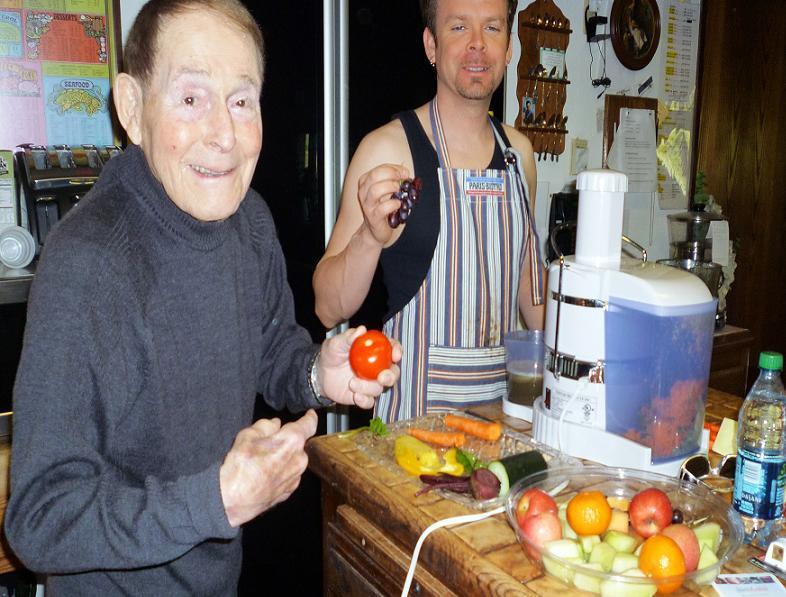 Jack LaLanne, born September 26, 1914) is an American fitness, exercise, nutritional expert,
and motivational speaker who has been called "the godfather of fitness learned from Paul Bragg
not to eat sugar - The usefulness of juicing, organic foods, exercise and clean water.
Jack LaLanne says, eat lots of fruits and vegetables and eat no sugar, no cheese no bread
no whole milk no processed foods - eat only natural foods. If you want bread bring your own
pita bread with you.
Jack says cooking kills - try and eat it unprocessed and raw. The body will repair itself as
long as it has the natural nutrition to do its job.
Jack LaLanne's weight training exercise routine:
"I do 20 sets for deltoids, 20 sets for pecs, and 20 sets for lats. It's important to change
things around. Maybe for 30 days I might do ten reps with high weight, but the tenth rep should
be to failure."
12 minutes of fast walking, 15 minutes in the pool swimming fast - all done in the morning around
6:00am.
"I get my nutrition from fruits and raw vegetables every day"
For his 95th birthday - No cake for Jack. He doesn't eat sugar.
Jack LaLanne exercises 2 hours a day including a half hour swim and recommends walking.
Why are you tired? Lack of physical exercise:
http://www.youtube.com/watch?v=vBVk071N88M&feature=related
Whats bad for you: Empty calories, soda pop and chips, cakes pies and candies.
----
Update: Jack Lalanne has passed away at age 96:
Francois Henri "Jack" LaLanne (September 26, 1914 – January 23, 2011)
LaLanne s scientific nutritionist and exercise guru died of respiratory failure due
to pneumonia Sunday afternoon at his home in Morro Bay on California's central Coast
on Sunday, January 23, 2011.
Jack LaLanne was raised as a Seventh-Day Adventist, a religion that advocates "eight keys"
to good health, including nutrition and exercise.
He said he would eat at least 10 raw vegetables and five pieces of fresh fruit daily.
His menus also consisted of fish, egg whites and high-fiber food. Of course, he also
urged others to pass on caffeine, refined sugar.
Jack always maintained a great sense of humor, which he also credited for adding to his
longevity.
Jack's older brother Norman LaLanne, who died in September 2005, lived to be 97. (1908–2005).
Jack is a man whose emphasis on lifestyle which one can control is key to long life.
When Jack was Well into his late 80s, LaLanne continued his personal fitness routine of two
hours a day — one hour of weight training and another hour exercising in the pool — beginning
at 5 or 5:30 in the morning.
For Breakfast he had fresh carrot juice, celery juice, some fruit, egg whites and soybeans.
http://www.youtube.com/watch?v=VuW3RfWJ1H0
Lunch: Raw vegetable salad with all types of vegetables and some olive oil and lemon juice.
Dinner: Two undercooked vegetables, fish and light yogurt
Jack's 10 point plan:
Exercise, Nutriton, Positive attitude, good habits, grooming, smile, posture, help others,
relaxation, faith
http://www.youtube.com/watch?v=8eB4cQO4sjo&NR=1
The crusade is never off my mind — the exercise I do, the food I eat, the thought I think
— all this and how I can help make my profession better-respected. To me, this one thing
— physical culture "exercise" and nutrition following natures law — is the salvation of America."
Jack LaLanne
In teenage years "LaLanne took nutritionist Paul Bragg's message fully to heart," "And,
by his own testimony, he never had cake, pie, ice cream or any sweet from that day forward,
nor did he drink a single cup of coffee or tea."
Jack LaLanne, born September 26, 1914) is an American fitness, exercise, nutritional expert,
and motivational speaker who has been called "the godfather of fitness learned from Paul Bragg
not to eat sugar - The usefulness of juicing, organic foods, exercise and clean water.
Jack LaLanne says, eat lots of fruits and vegetables and eat no sugar, no cheese no bread
no whole milk no processed foods - eat only natural foods. If you want bread bring your own
pita bread with you.
Jack says cooking kills - try and eat it unprocessed and raw. The body will repair itself as
long as it has the natural nutrition to do its job.
Jack LaLanne's weight training exercise routine:
"I do 20 sets for deltoids, 20 sets for pecs, and 20 sets for lats. It's important to change
things around. Maybe for 30 days I might do ten reps with high weight, but the tenth rep should
be to failure."
12 minutes of fast walking, 15 minutes in the pool swimming fast - all done in the morning around
6:00am.
"I get my nutrition from fruits and raw vegetables every day"
For his 95th birthday - No cake for Jack. He doesn't eat sugar.
Jack LaLanne exercises 2 hours a day including a half hour swim and recommends walking.
Why are you tired? Lack of physical exercise:
http://www.youtube.com/watch?v=vBVk071N88M&feature=related
Whats bad for you: Empty calories, soda pop and chips, cakes pies and candies.
----
Update: Jack Lalanne has passed away at age 96:
Francois Henri "Jack" LaLanne (September 26, 1914 – January 23, 2011)
LaLanne s scientific nutritionist and exercise guru died of respiratory failure due
to pneumonia Sunday afternoon at his home in Morro Bay on California's central Coast
on Sunday, January 23, 2011.
Jack LaLanne was raised as a Seventh-Day Adventist, a religion that advocates "eight keys"
to good health, including nutrition and exercise.
He said he would eat at least 10 raw vegetables and five pieces of fresh fruit daily.
His menus also consisted of fish, egg whites and high-fiber food. Of course, he also
urged others to pass on caffeine, refined sugar.
Jack always maintained a great sense of humor, which he also credited for adding to his
longevity.
Jack's older brother Norman LaLanne, who died in September 2005, lived to be 97. (1908–2005).
Jack is a man whose emphasis on lifestyle which one can control is key to long life.
When Jack was Well into his late 80s, LaLanne continued his personal fitness routine of two
hours a day — one hour of weight training and another hour exercising in the pool — beginning
at 5 or 5:30 in the morning.
For Breakfast he had fresh carrot juice, celery juice, some fruit, egg whites and soybeans.
http://www.youtube.com/watch?v=VuW3RfWJ1H0
Lunch: Raw vegetable salad with all types of vegetables and some olive oil and lemon juice.
Dinner: Two undercooked vegetables, fish and light yogurt
Jack's 10 point plan:
Exercise, Nutriton, Positive attitude, good habits, grooming, smile, posture, help others,
relaxation, faith
http://www.youtube.com/watch?v=8eB4cQO4sjo&NR=1
The crusade is never off my mind — the exercise I do, the food I eat, the thought I think
— all this and how I can help make my profession better-respected. To me, this one thing
— physical culture "exercise" and nutrition following natures law — is the salvation of America."
Jack LaLanne
In teenage years "LaLanne took nutritionist Paul Bragg's message fully to heart," "And,
by his own testimony, he never had cake, pie, ice cream or any sweet from that day forward,
nor did he drink a single cup of coffee or tea."